Tips for reducing water usage in Residential Landscapes
This article goes through 7 various tips on the best practices for reducing water usage in Residential landscapes. All of these tips are a series of things that we can do when designing, while also incorporating into our own day-to-day activities.
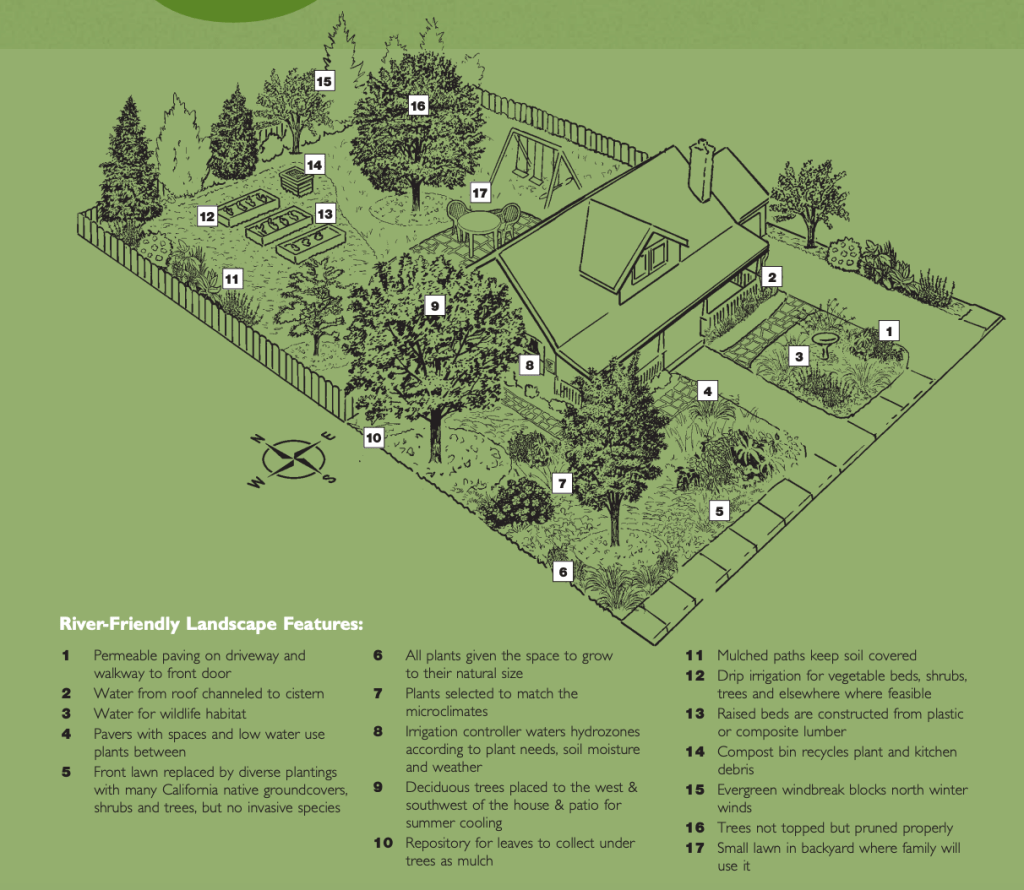
The first tip is to plant foliage in the spring months, this ensures that the water use when first installed is incredibly less than if they were planted in the summer months. The next tip is one that we, in California have heavily emphasized, which is to plant California natives within the landscape. Based off of the information that we have learned in our Plant materials class, it is important to note that just because a plant is deemed to be a California Native, does not mean that it grows and is successful in all California landscapes. It is always best practice to check the plants USDA Hardiness zones, Sunset climate zones, and AHS heat zones. The third tip is in regards to compost and mulch. Adding compost and layering mulch on the top allows for moisture to be contained and to prevent evaporation. The next tip addresses lawns and the prevalent need to minimize large lawns. Lawns and turfs require high volumes of maintenance and water. The best action to take is to replace neglected lawn space with a drought-tolerant, low water use ground cover. Tip five is in regards to sprinkling, the article states that the best time to turn sprinkles on is in the morning hours, and allow for the water to soak throughout the day. The next tip follows the importance of greywater and stormwater as a method of irrigation. This is an easy methods to derive water on site, and requires less irrigation. Lastly, the final tip that this article had noted was that the implementation of drip irrigation systems should be more integrated into the field. Drip irrigation systems use less water than pop up sprinklers. Alongside, they water plants at the very root, which is better for the plant, as well. These tips are all things that we can implement into our current studio projects, whether they may be residential sites or not. For LA 403 this quarter, my design concept is to design a sustainable, energy efficient landscape designed for families and children’s growth in mind. Embedding these design details within my project will further emphasize sustainability in early childhood. Alongside, we looked at case studies regarding “river friendly landscapes”, below is a diagram within the booklet that outlines what these types of landscapes should look like.
 Ecology, restoration & resilience